· Erin Calloway
Your Cat's First Walk Outside
The first walk is not really a walk. My boldest cat spent her entire first outing sitting on the doormat, nose working like a machine, and that outing was a complete success. The goal of day one is a calm cat outdoors, not distance covered.
Over eight years and three cats, I have refined the first outing into a routine that is almost boring, which is exactly what a first outing should be. Here is the whole plan, from the readiness check to the moment you close the door behind you.
Is your cat ready for the first walk?
Your cat is ready when it wears the harness indoors without freezing, walks, eats, and plays normally in it, and treats the leash as background noise. If any of that is missing, spend another week indoors. The first walk should feel like a small extension of routine.
Readiness is behavioral, not chronological. Some cats hit this bar in ten days, others need two months, and rushing it is the one mistake you cannot patch outdoors. If the vest still triggers the flop or the statue freeze, go back through the stages in our harness training guide before booking a date with the backyard.
Leashed walking is also the responsible way for a cat to experience the outdoors, which is worth saying plainly. Free-roaming cats take a staggering toll on wildlife, and a cat on a leash takes none.
birds are killed by free-ranging cats in the U.S. every year, a toll a leashed, supervised cat contributes nothing to
A harness walk gives your cat the sun, the smells, and the grass while the local mockingbirds keep their nests. It is the rare arrangement where the cautious option is also the generous one.
Pick the right time and place
Choose a quiet, enclosed space a few steps from your own door: a backyard, a fenced patio, or a calm courtyard. Go at a low-traffic hour in mild, dry weather, and skip windy days, since gusts and sudden noises are the main triggers for panic outdoors.
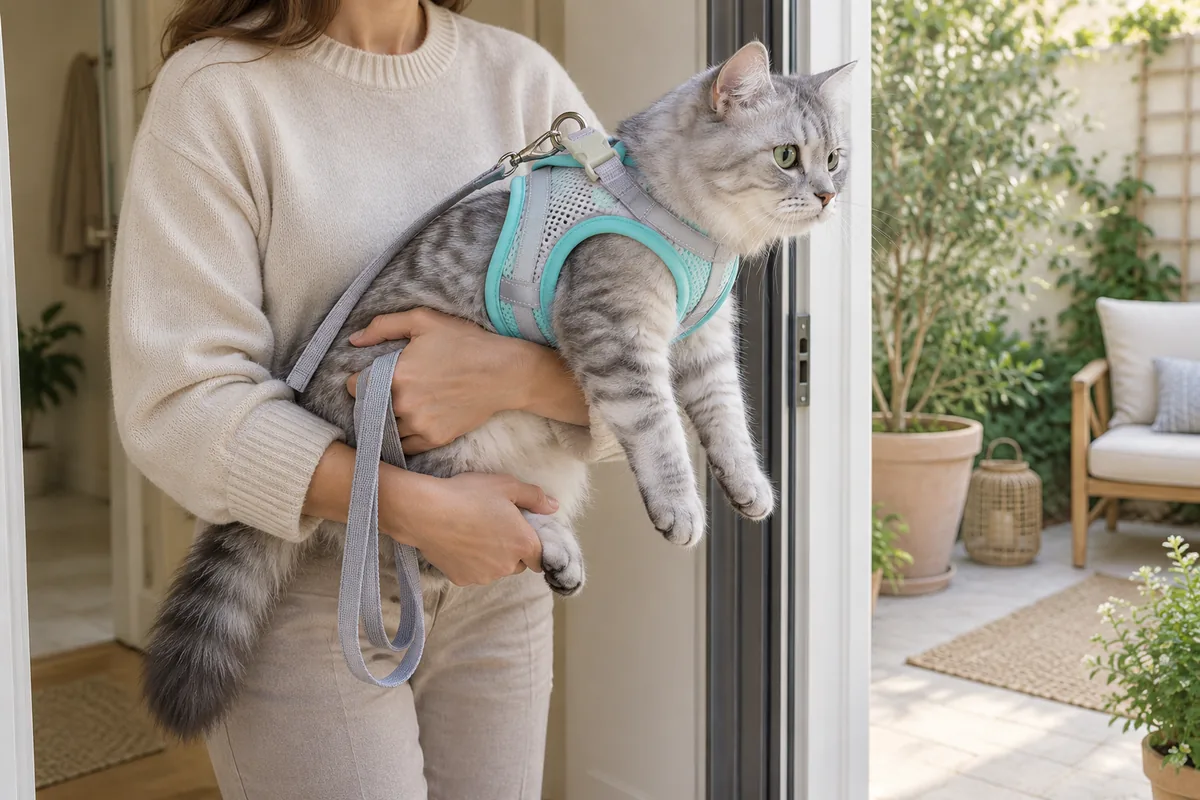
Proximity to your own door matters more than beauty. The first outing should happen within a few steps of home, because home is where a startled cat wants to go, and a short, familiar retreat path keeps a scare small. Save the park for month two or three.
Think about the soundscape before you commit. Garbage trucks, school pickup, a neighbor's leaf blower, and lawn crews all follow schedules you can learn and avoid. Early mornings on a weekend are quiet almost everywhere in the suburbs, which is why most of our first outings have happened before 8 a.m.
Weather is a real variable, not a footnote. Wind moves everything at once, which reads as danger to a cat, and wet ground makes most cats miserable within a minute. A mild, dry, still day removes two of the three most common reasons first walks end early.
Run a pre-walk gear check
Before the door opens, run the two-finger check at the neck and chest, press the velcro flat, snap the clip, and tug the leash ring gently. The whole ritual takes thirty seconds and removes the most common causes of a slipped harness on a first outing.
The two-finger check is the heart of the ritual, and our guide to putting on a cat harness covers it in detail. Outdoors, fit is not a comfort question but a containment question, and the math of that is laid out in our answer to whether cat harnesses are escape proof.
Before every outing with the Escapaw harness, check three things: velcro pressed flat with no fur trapped, the buckle clip snapped over it so both closures share the work, and the leash clasp seated on the metal D-ring. The set's matching leash means one less strap to second-guess, and the reflective strips catch the light on pre-sunrise walks. Fasten everything indoors, always, so the door never opens on an unclipped cat.
If you are still choosing gear, a snug wrap-style vest is the right first-walk equipment, and the cat harness and leash page explains what a matched set changes. Growing kittens need their fit re-checked far more often, as our kitten harness guide details.
During the walk, let your cat lead
Carry your cat out, set them down in the chosen spot, and stand still. Let your cat sniff, crouch, and map the space at their own speed. Keep the leash loose, never drag, and treat sitting in the grass doing nothing as a completely successful walk.
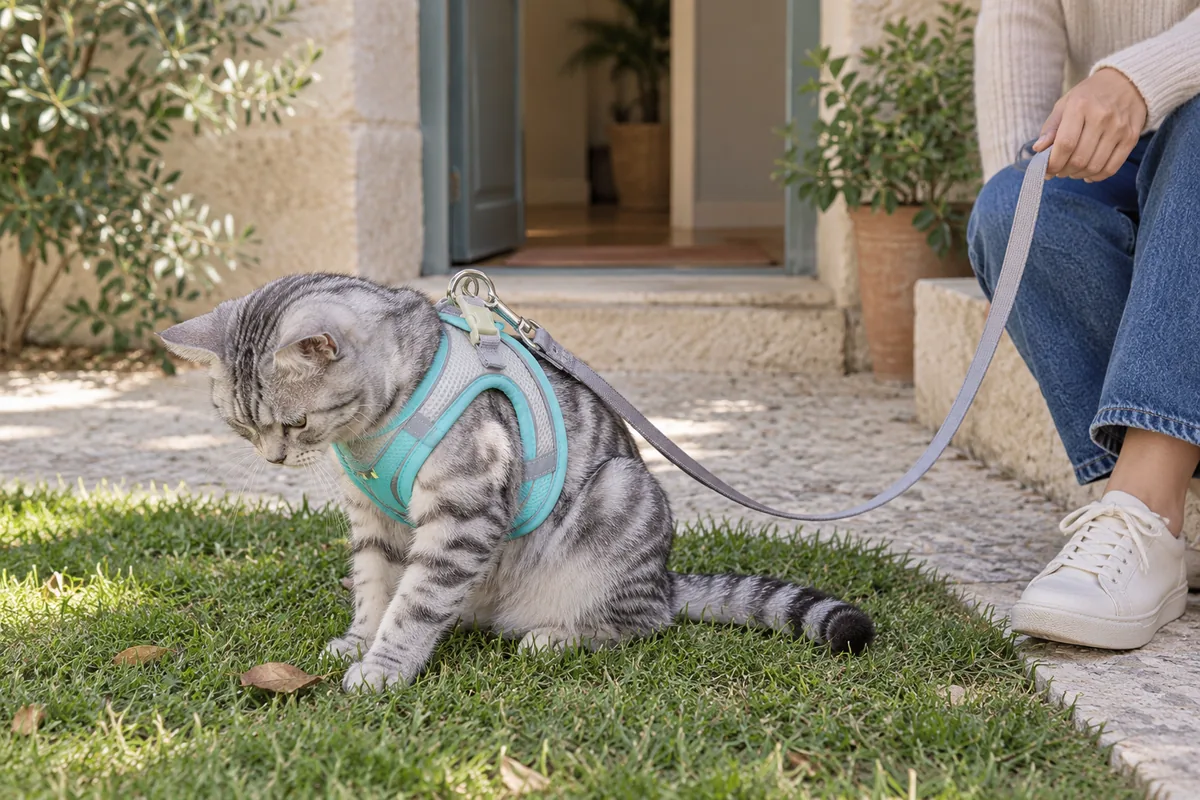
Carrying your cat over the threshold sounds like a small detail, but it prevents the worst first-walk habit: door darting. A cat that walks itself out the open door learns the door is an exit, while a cat that is carried out learns outings begin in your arms. The difference matters every day for the rest of its life.
Once your cat is on the ground, your job shrinks to leash management. Keep a gentle smile of slack in the line, follow rather than steer, and never pull your cat toward anything. Cats explore in loops and pauses, with long stretches of pure sniffing, and a first outing that covers ten square feet is normal. Large cats in particular tend to move deliberately and settle into sentry positions, something our cat harness for large cats page touches on.
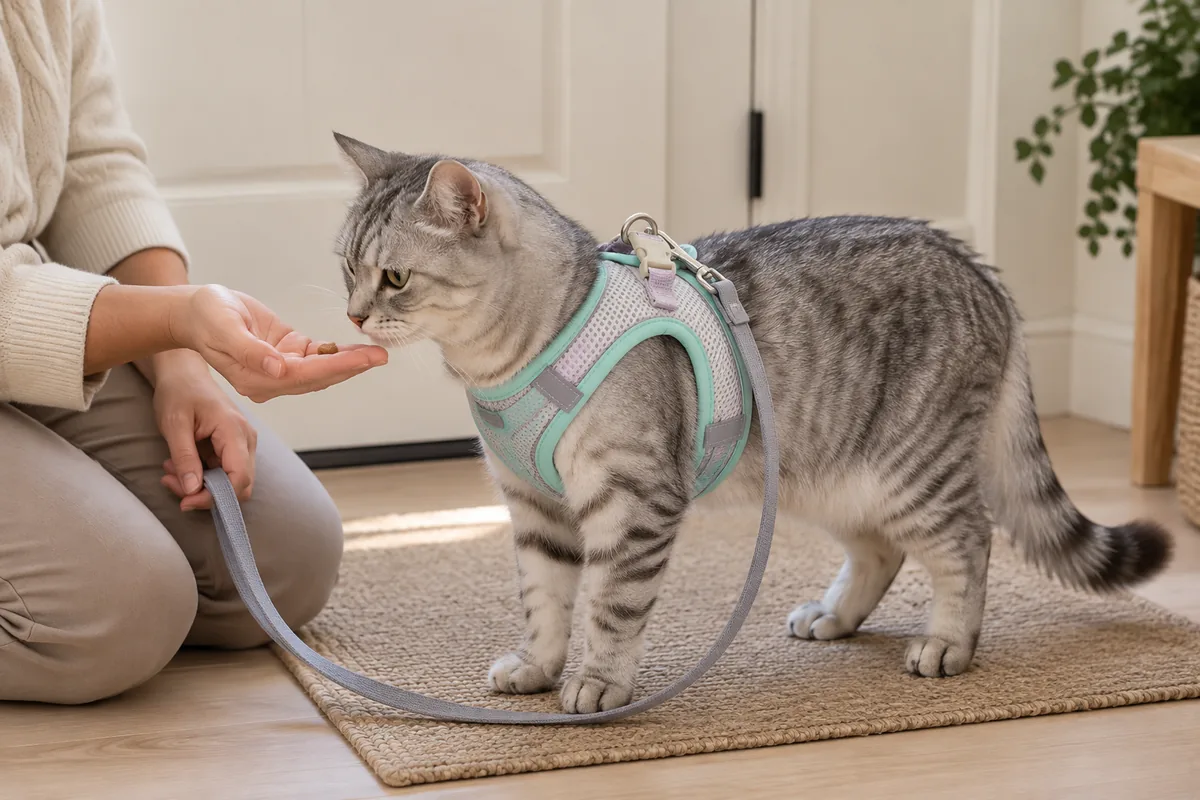
Bring treats, but expect them to be ignored. Many cats are too absorbed to eat outdoors at first, and appetite returning across outings is one of the clearest signs that comfort is building.
Have an exit plan before you need it
Decide in advance how the outing ends: a calm pick-up, a short carry inside, and a treat at the door. Watch for a low tail, flattened ears, or sudden stillness, and head home at the first sign. Ending early builds trust that outside is always safe.
The plan matters most when something goes wrong. If a loud noise hits, do not reel in the leash like a fishing line. Crouch, gather the slack as you move to your cat, lift them against your chest, and walk inside without ceremony. Your calm is data your cat reads in real time.
End every outing before your cat wants it to end, especially the first few. A cat carried in while still curious spends the afternoon by the door asking to go again, while a cat that panicked its way home may refuse the harness for a week. Quitting while you are ahead is the whole skill.
The first weeks, outing by outing
Keep the first two or three outings under ten minutes in the same spot. Once your cat relaxes there, stretch to fifteen or twenty minutes and add a few yards of new ground each time. New places, new sounds, and longer routes come week by week, not day by day.
| Outing | Where | How long | Goal |
|---|---|---|---|
| 1 to 3 | Same enclosed spot by your door | 5 to 10 minutes | Calm sniffing, relaxed body |
| 4 to 8 | Same spot plus a few new yards | 10 to 20 minutes | Eating treats outdoors, loose-leash steps |
| Week 3 and on | Quiet street or garden route | 20 to 30 minutes | Confident walking, new places monthly |
Progress is rarely a straight line, and a regression after a scare or a long rainy week is normal. Drop back one column, shrink the outing, and rebuild. The routines other owners settled into, including plenty of balcony-only and yard-only arrangements, come up again and again in our verified reviews.
Keep reading: if you are still comparing gear before the big day, our best cat harness guide sorts the harness types by escape resistance.
Free shipping · 30-day returns